

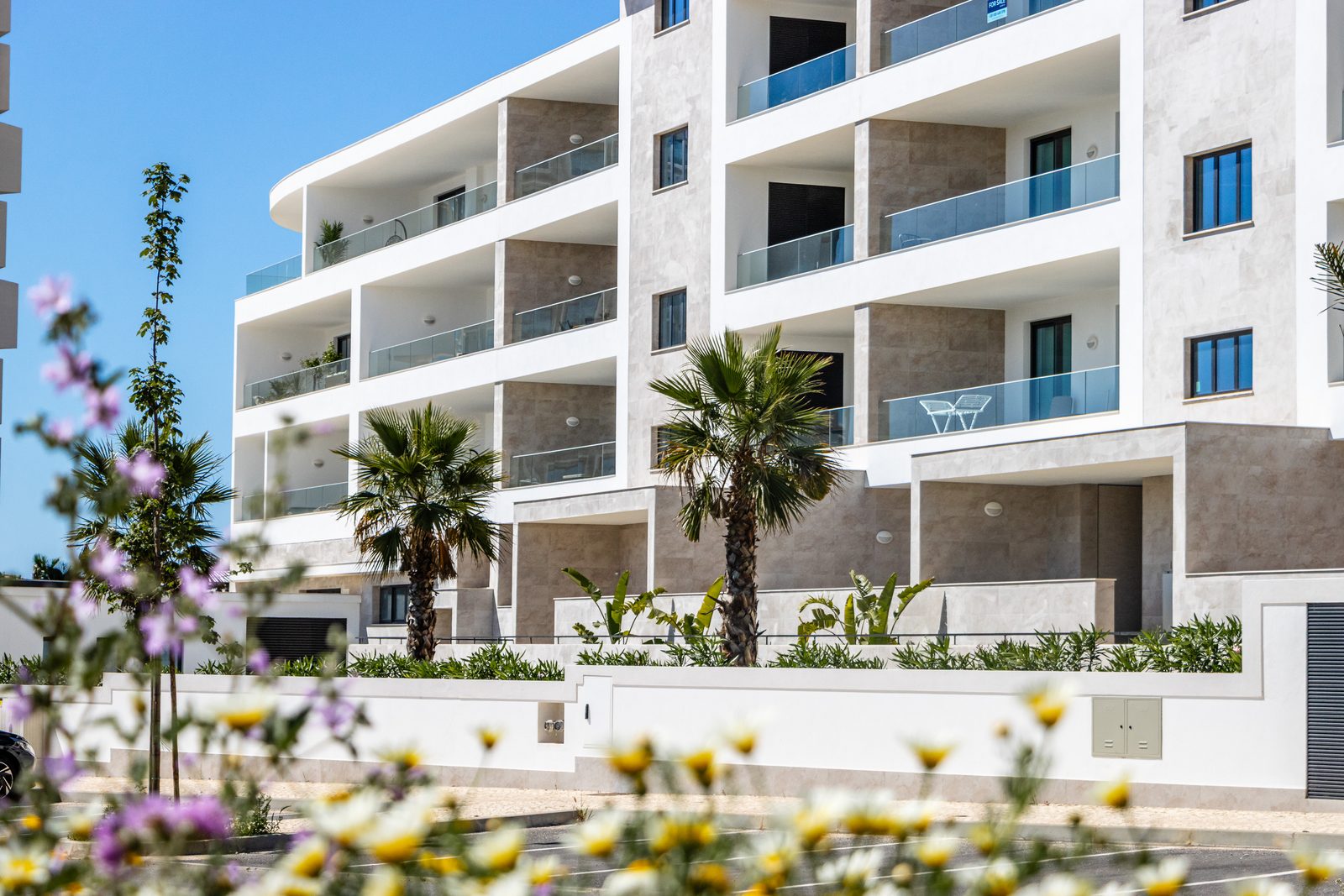
Not every holiday let in the western Algarve is a detached villa behind its own gate. A good number are apartments and townhouses in shared buildings around Lagos, Meia Praia and the coastal resorts, and for those owners the condominium is part of the picture. The rules on running an Alojamento Local inside a building changed twice in quick succession, so it is worth setting out where they stand in 2026.
The short version is that the heavy restrictions introduced in 2023 were largely unwound in late 2024, and the regime in 2026 sits closer to the older, more permissive position, with some extra power handed to condominiums and to municipalities. Our reading is that most compliant owners have little to fear, provided they register properly and keep neighbours onside.
Registration comes first
A short term let still needs to be registered as an Alojamento Local through the Registo Nacional de Turismo before it takes a single booking. Registration is tied to the property and, since the 2024 changes, no longer carries the five year expiry or the 2030 review that the earlier law had introduced, so a registration made today does not lapse on a fixed date. It also now transfers with the property on sale, which matters when an owner comes to sell a let as a going concern rather than as a bare apartment.
What the condominium can and cannot do
The important principle is that using an autonomous unit as an Alojamento Local is not treated as a change of use in itself. A building cannot block a let simply because some owners dislike the idea. What a condominium can do is set out in Decreto-Lei 76/2024, published in the Diário da República in October 2024 and in force from the following month, and the thresholds are specific.
- To oppose an existing let in a particular unit, the assembly needs a reasoned decision backed by more than half of the building's permilagem, resting on repeated conduct that disturbs normal use of the building
- To prohibit the activity across the whole building, owners must create or amend the condominium regulation with a two thirds majority of the permilagem
- A building wide prohibition applies only to registration requests made after the decision, so it cannot retroactively close an existing compliant let
- The earlier extraordinary contribution charged on let units, known as the CEAL, was revoked in 2024 and in practice was never actually collected
Portugal's Supreme Court has also held that an Alojamento Local in a residential fraction is admissible without the condominium's prior authorisation, which sits consistently with the rule that a let is not a different use. In plain terms, a compliant owner stands on firm ground, and a hostile neighbour needs a real pattern of nuisance rather than a general objection to the idea of guests.
Where nuisance becomes the real risk
Because opposition turns on disturbance, the practical risk for an apartment or townhouse let is the behaviour of guests rather than the paperwork. A single difficult group that triggers noise complaints gives the building the grounds it would otherwise lack. The operational answer is the same as for any well run let, and it is worth taking seriously in a residential block.
- Setting and enforcing quiet hours, with a clear house policy that guests accept at the point of booking
- Screening bookings to steer away from large parties in a residential building
- Handling waste, parking and shared areas the way a resident would rather than leaving guests to work it out
- Keeping a named local contact who can respond quickly when a neighbour raises an issue
Insurance and the shared building
Owners sometimes forget that fire insurance is compulsory for an apartment in a condominium under the Civil Code, separate from any holiday let cover, while the condominium itself insures the common parts. A unit that brings a steady flow of guests through a shared building is a sensible candidate for proper public liability cover as well. None of this is onerous, but it is the kind of detail that is easy to miss when a villa owner's instincts are applied to an apartment.
The municipal layer
On top of the national rules, municipalities with large numbers of registered lets were given power to define containment areas where new registrations can be limited or paused. Owners buying into a building with a view to letting should check the position in their own municipality before committing, since a unit that cannot be newly registered is worth considerably less as a let. For an existing registered unit the risk is smaller, because the restrictions bite on new registrations rather than on established ones.
Anyone buying an apartment to let is also well advised to read the constitutive title and the condominium regulation before the purchase completes, rather than after. Those documents are where a prior ban or a restriction on short term use would sit, and they are straightforward to request. A unit that already holds a valid registration, in a building whose rules do not prohibit the activity, is a far simpler proposition than one bought on the assumption that letting will be allowed. Confirming the paperwork at the outset avoids the expensive discovery that a plan does not fit the building it depends on.
Summary
The condominium rules that looked threatening in 2023 have settled into something workable by 2026. A let in a shared building is not a change of use, cannot be blocked by general objection, and keeps its registration indefinitely, but it can be opposed where guests cause real and repeated disturbance. The owner's job is to register correctly, insure sensibly and run the let so that neighbours have nothing to complain about.
If you own an apartment or townhouse around Lagos or the western resorts and want it let and managed in a way that keeps the building on your side, resort rentals algarve handles registration, guest screening and the day to day relationship with your condominium so that the shared parts of ownership stay straightforward.
