

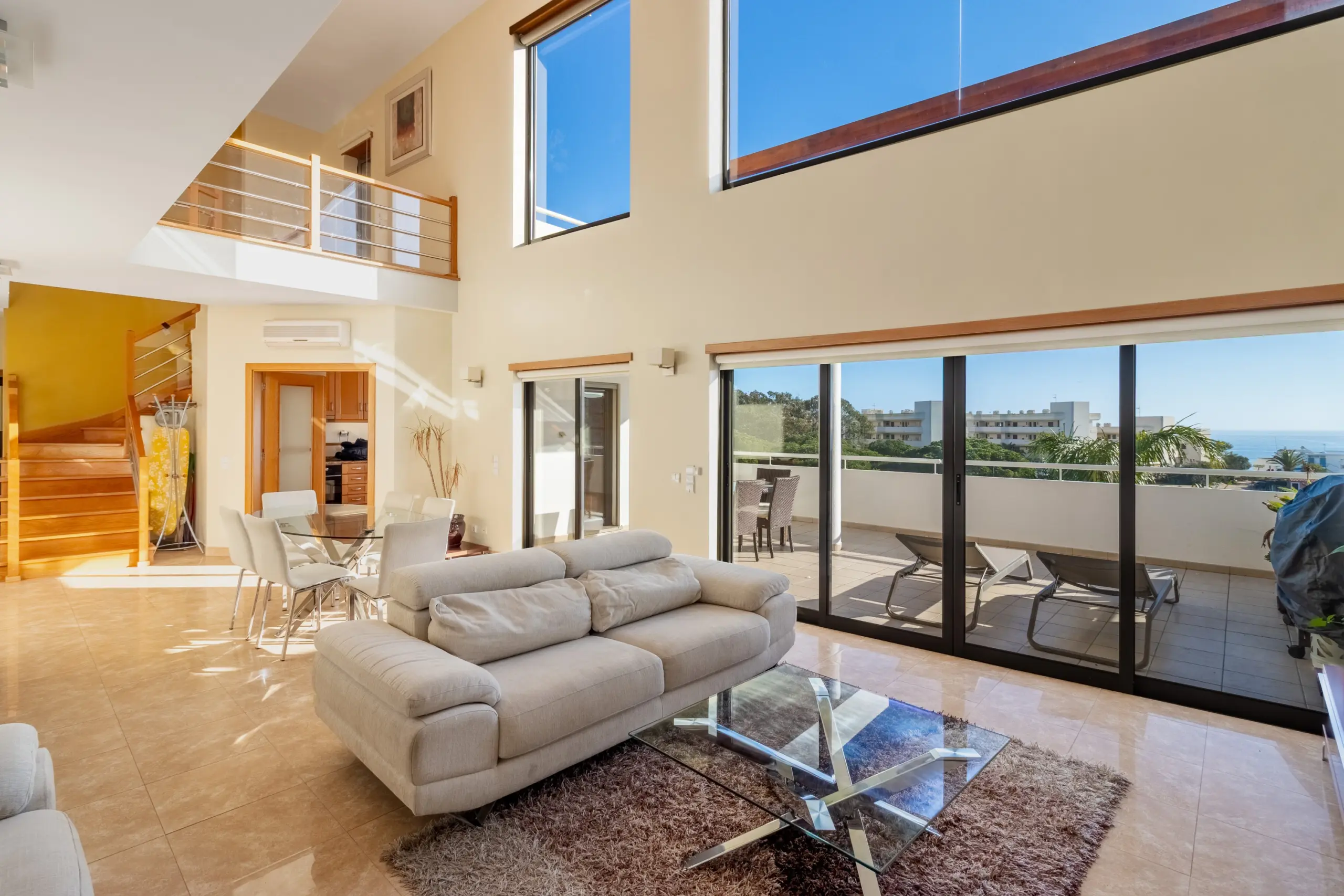
Algarve holiday let owners often underestimate how quickly a property’s presentation slips below the level guests expect. The wear from 30 to 50 turnovers a year is genuinely substantial and the tipping point between well-maintained and tired tends to arrive earlier than owners assume. Understanding the refresh cycle, what gets refreshed when and at what rough cost, is one of the more useful things an owner can do to protect both the asset and the booking rate.
This piece sets out the practical timelines we work to across the managed properties we look after and the approximate costs at 2026 levels. The exact numbers vary by property type and finish standard, but the cycles tend to be more consistent than the costs.
Quick Answer
- Soft furnishings refresh every 3 to 5 years
- Outdoor furniture every 4 to 6 years in Algarve sun and salt conditions
- Interior paint every 5 to 7 years
- Pool finish (render or liner) every 8 to 12 years
- Kitchen and bathroom hardware every 7 to 10 years
- Major refurbishment every 12 to 15 years
1. Soft Furnishings and Linen
The fastest-wearing category and the most visible to guests. Sofa upholstery, scatter cushions, throws and rugs in heavily-used living areas typically need replacement every 3 to 5 years on a high-occupancy holiday let. Linen wears faster than owners expect because of the high-temperature wash cycles that hospitality-grade laundering requires and most managed properties replace the bulk of sheets and towels every 18 to 24 months on a rolling basis.
Rough cost is €1,500 to €4,000 per full living-room refresh, depending on furniture grade and finish.
2. Outdoor Furniture
Algarve sun, salt and seasonal weather are hard on outdoor furniture. Even the higher-grade weatherproof brands begin to look tired within 4 to 6 years of continuous outdoor use. The most common refresh cycle we see is a partial refresh at year three (cushions and umbrellas) and a full refresh at year five or six. Owners who store outdoor furniture under cover during the off-season extend the lifespan materially, but most do not have the storage to do so.
Rough cost is €1,200 to €3,500 per typical Algarve villa terrace setup.
3. Interior Paint
Interior walls in a holiday let take more wear than in an owner-occupied home. Marks accumulate around door frames, light switches, behind beds and on staircases. The right cycle for a full interior repaint is 5 to 7 years for a busy property, more frequently in high-use bedrooms and common rooms. Touch-up patches every off-season help, but they tend to leave visible inconsistencies after a few rounds and a full repaint becomes worthwhile.
Rough cost is €4,000 to €9,000 for a full villa interior repaint depending on size and finish.
4. Pool Maintenance and Finish
Pool render or liner has a meaningful lifespan but it does not last indefinitely. Algarve pools with regular use typically need a render refresh every 8 to 12 years and a more substantial works programme every 15 to 20 years. Pump and filtration equipment cycles separately, with most pumps requiring replacement every 6 to 9 years and salt chlorination systems every 5 to 8 years.
Rough cost is €3,500 to €8,000 for a render refresh and €1,000 to €2,500 for pump replacement.
5. Kitchen and Bathroom Hardware
The kitchens and bathrooms in a holiday let see compressed wear. Taps, shower mixers, kitchen drawer runners, oven seals and dishwasher seals all wear faster than in an owner-occupied home. A planned hardware refresh every 7 to 10 years usually prevents the slide into tired finishes that affect guest perception.
Rough cost is €1,000 to €3,500 for a hardware-level refresh per kitchen or bathroom.
6. The Major Refurbishment Cycle
Roughly every 12 to 15 years, most Algarve holiday lets benefit from a more substantial refurbishment that addresses several of the categories above in combination. This is when kitchens get replaced rather than refreshed, bathrooms are reconfigured and the overall finish standard is brought back to a current level. Properties that defer this cycle indefinitely begin to lose pricing power against newer competitors on the same beach.
Rough cost is €40,000 to €120,000 for a typical 3 to 4 bedroom villa, depending on scope and finish standard. Sector benchmarks published by AHRESP on the Portuguese hospitality and short-stay accommodation industry give a useful regional reference for ballpark costs.
Why the Cycle Matters for Booking Rate
Properties that hold their finish standard tend to hold their rate. Properties that allow the standard to slip see the predictable consequences in nightly rate and occupancy 18 to 24 months later. By the time the booking rate has visibly fallen, the catch-up cost is often higher than the rolling refresh cost would have been if it had been kept current.
- Year-on-year ADR holds when the property finish remains current
- Booking lead times shorten when listing photographs look dated
- Repeat guest rates fall when the impression of slip becomes visible
- Refresh cost compounds when deferred
Where Property Management Sits in the Cycle
Active property management is, in practice, the function that surfaces the refresh decisions at the right time. The slip from current to tired is gradual and easy to miss when the owner sees the property only a few times a year. Off-season operations, when occupancy is lower and works can be planned around the calendar, are typically when the refresh cycles are executed. A managed property has these cycles tracked across the seasonal calendar rather than handled as a string of unexpected costs.
Summary
The refresh cycle for an Algarve holiday let comprises several overlapping cycles that together protect the asset and the booking rate. Owners who plan for these rolling costs at the budgeting stage usually find them less disruptive than owners who treat each one as an unexpected surprise. A managed property tends to have these cycles tracked across the seasonal calendar, which spreads the load and avoids the worst of the catch-up scenario.
If you would like a view on where your Algarve holiday let sits in its refresh cycle, please get in touch.